Nissan needed a hybrid version of the Rogue, well, yesterday. Nearly all of this compact SUV’s competitors are available with some kind of gas-electric powertrain, but Nissan didn’t have its proprietary e-Power series-hybrid system ready for the U.S. yet. So it turned to its partner at Mitsubishi to quickly gin up a Nissan version of the existing Outlander PHEV (remember, the Outlander is based on the Rogue to begin with).
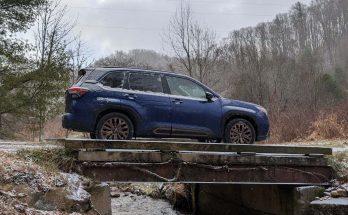
This rushed effort to get some kind of hybrid SUV into Nissan dealerships meant that we ended up with what you see here, the 2026 Rogue plug-in hybrid. It’s a veritable twin of the Outlander PHEV, only with Rogue badges. It’ll do for now, but it’s clearly a stopgap until the next-gen Rogue hybrid arrives—Nissan prefers to call it a “bridge.” Whatever.

If the Nissan and Mitsubishi share the same platform, then why doesn’t this Rogue look like a Rogue? The answer comes down to cost and timing. A new 2027 Rogue with a Nissan hybrid system is slated to arrive next year anyway, so Nissan decided it didn’t make sense to spend extra time and money fitting the Mitsubishi powertrain into the existing Rogue’s body for a model that’s only meant to last a short time anyway.
For Sale Near You
See all results for 2026 Nissan Rogue Hybrid for sale near 04621


How does the Rogue plug-in hybrid drive? Better than the standard gas-powered Rogue. The Mitsubishi powertrain has a total output of 248 horsepower, which should make it considerably quicker than the regular 201-hp Rogue. In our testing, the Outlander PHEV reached 60 mph in 6.6 seconds, which is 1.4 seconds quicker than the turbo-three nonhybrid Rogue could manage. The hybrid is considerably heavier than the nonhybrid due to its battery pack and extra components, and you feel that weight in corners, but it rides nicely and has decently weighted steering.
Like the Mitsubishi, the Rogue PHEV gets a small third-row seat that will fit a couple of kids in a pinch. This is a rarity among compact SUVs, but we figure most owners will keep the wayback seat folded for the extra cargo space. The interior is no different from the Mitsubishi’s, which looked pretty much like the Nissan’s to begin with anyway—you get the idea. The Nissan’s 9.0-inch infotainment screen is slightly smaller, though, because the Rogue doesn’t get the updated Outlander’s larger 12.3-inch touchscreen setup.


The Nissan also doesn’t have the Mitsubishi’s optional DC fast-charging capability, which admittedly uses an outdated ChaDeMo port, so it isn’t all that useful to begin with. But it seems as though the only reasons to choose the Nissan over its sibling are if you live closer to a Nissan dealership or can snag a deal on one. We expect pricing to be roughly the same between the two, meaning a starting price somewhere in the high-$40,000s range (the Rogue hybrid will only offer SL and Platinum trim levels, as opposed to the Outlander’s wider array of trims). But hey, now Nissan can say that it has a hybrid SUV on offer—which counts for something, at least.
➡️ Skip the lot. Let Car and Driver help you find your next car.


Specifications
Specifications
2026 Nissan Rogue PHEV
Vehicle Type: front-engine, front- and rear-motor, all-wheel-drive, 7-passenger, 4-door wagon
PRICE (C/D EST)
Base: SL, $49,000; Platinum, $54,000
POWERTRAIN
DOHC 16-valve 2.4-liter inline-4, 131 hp, 144 lb-ft + 2 AC motors, 114 and 134 hp, 188 and 144 lb-ft (combined output: 248 hp, 332 lb-ft; [C/D est] 17-kWh lithium-ion battery pack; peak charge rate, AC 3.5 kW)
Transmissions, F/R: continuously variable automatic/direct-drive
DIMENSIONS
Wheelbase: 106.5 in
Length: 185.4 in
Width: 73.3 in
Height: 68.5 in
Passenger Volume, F/M/R: 57/46/18 ft3
Cargo Volume: 13 ft3
Curb Weight (C/D est): 4700–4800 lb
PERFORMANCE (C/D EST)
60 mph: 6.5–6.6 sec
1/4-Mile: 15.7–15.8 sec
Top Speed: 110 mph
EPA FUEL ECONOMY (C/D EST)
Combined/City/Highway: 26/25/27 mpg
Combined Gasoline + Electricity: 64 MPGe

Despite being raised on a steady diet of base-model Hondas and Toyotas—or perhaps because of it—Joey Capparella nonetheless cultivated an obsession for the automotive industry throughout his childhood in Nashville, Tennessee. He found a way to write about cars for the school newspaper during his college years at Rice University, which eventually led him to move to Ann Arbor, Michigan, for his first professional auto-writing gig at Automobile Magazine. He has been part of the Car and Driver team since 2016 and now lives in New York City.
Nguồn: Chi tiết
- Chưa có bình luận nào.